Family STEAM Night
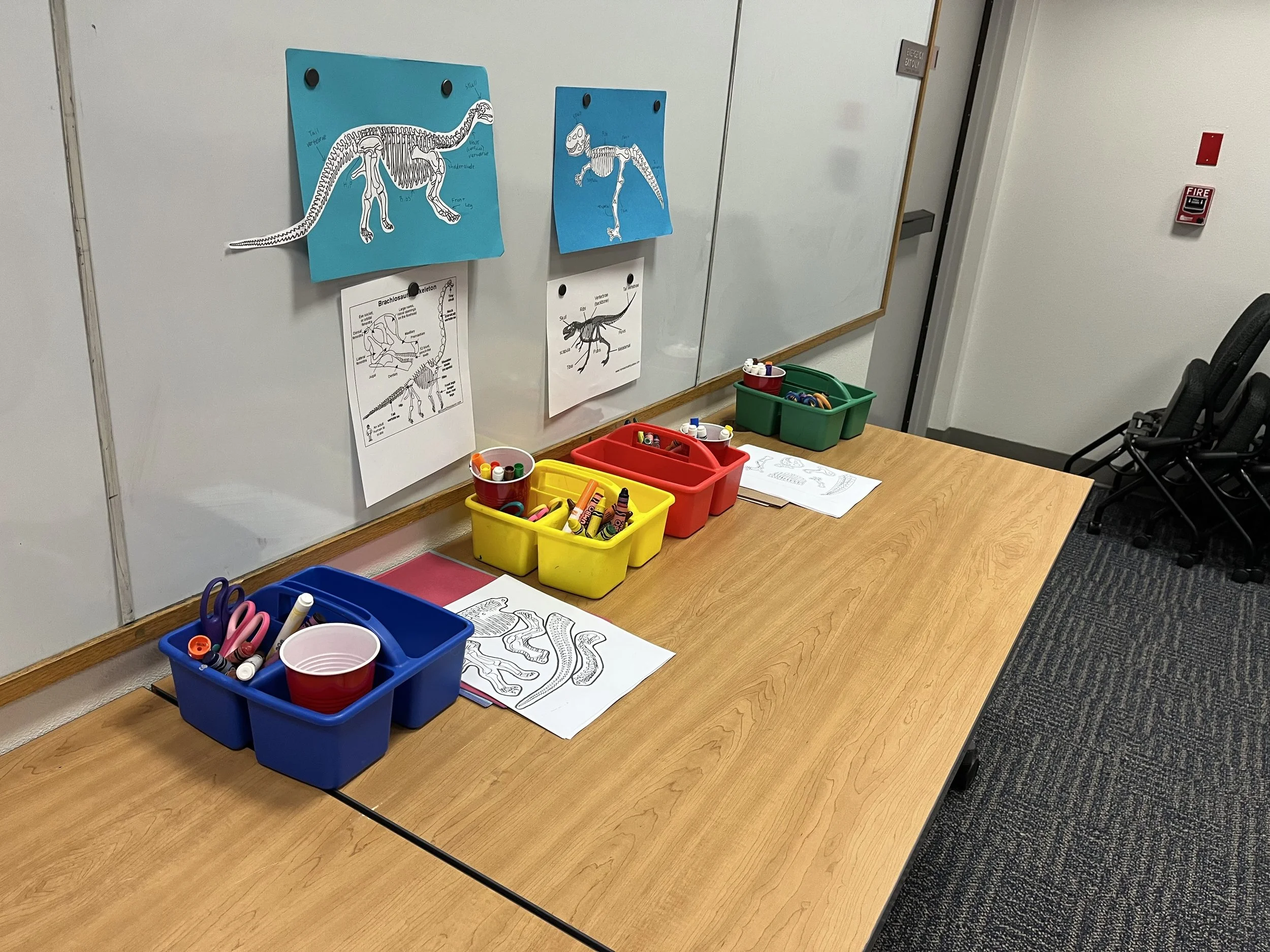
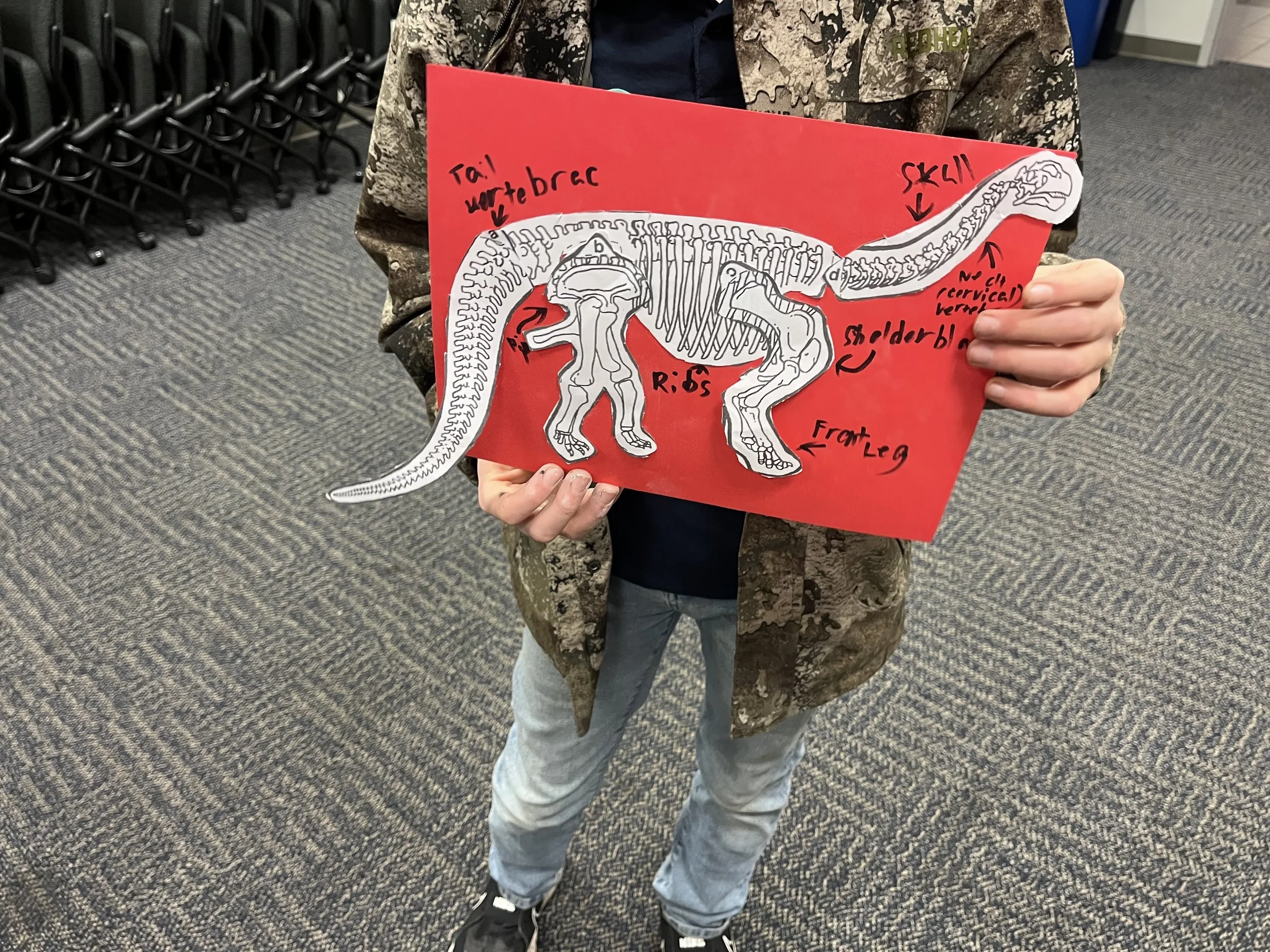
STEAM Night-Dinosaur Skeletons
Materials:
Print out 15 copies each of two different dinosaur skeleton templates: Dinosaur 1, Dinosaur 2
Print out labeled Trex and Brontosaurus skeletons: https://www.kids-dinosaurs.com/images/dinosaur-skeletons-tyrannosaurus-rex.jpg
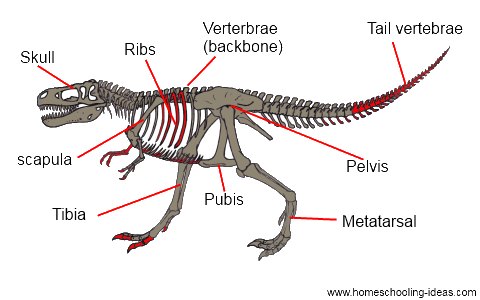
https://i.pinimg.com/736x/c0/fa/2d/c0fa2d462baa4614d8882c0bc35d6a27.jpg

Construction paper for the base
Scissors
Gluestick
Pens/pencils
Instructions:
Cut out the different pieces of the dinosaur skeleton
Arrange the skeleton on a piece of construction paper according to the template.
Glue the different skeleton pieces in place
Label the different parts of the skeleton based on the labeled template.
Questions:
What parts of a dinosaur skeleton do human skeletons have in common? (Spine and pelvis) What parts are different? (claws and tails)
What skeleton parts do the two different dinosaurs have in common?
What does a dinosaur's skeleton tell us about how it lived and what it ate? (Brontosaurus long neck for eating leaves vs. T. rex’s claws and teeth for eating meat)
Fact or Fiction:
Dinosaur fossils are often made of rock instead of bone. Fact! Permineralization occurs when dissolved minerals carried by groundwater fill up spaces inside the cells of plants and animals. This is the most common type of fossil preservation.
There are two different types of fossils: Body fossils and trace fossils. Fact! Body fossils are remains of living organisms, such as animals and plants. Trace fossils tell us that organisms were present, like eggs, nests, and footprints.
Dinosaur fossils are extremely common on all 7 continents. Fiction! While dinosaurs have been found on all 7 continents, including Antarctica, they aren’t common. Most dinosaur bones decompose quickly. It’s only when dinosaurs are buried quickly, so no oxygen reacts with the body, that fossils are made.